Why Hangul Is the Most Scientific Alphabet Ever Invented
Korean can look like geometry homework — circles, squares, little lines pointing every which way. Here's the secret almost nobody tells beginners: it's the opposite of random. Hangul is the most deliberately designed — the most genuinely scientific — alphabet on Earth. Once you see why each letter is shaped the way it is, the wall turns into a map.
Someone actually invented it
Most alphabets are accidents. The letter A you're reading drifted out of ancient traders' scratch-marks over centuries. Hangul didn't. In 1443, King Sejong the Great sat down and invented it on purpose — so ordinary people, not just elites who'd memorized thousands of Chinese characters, could finally read and write.
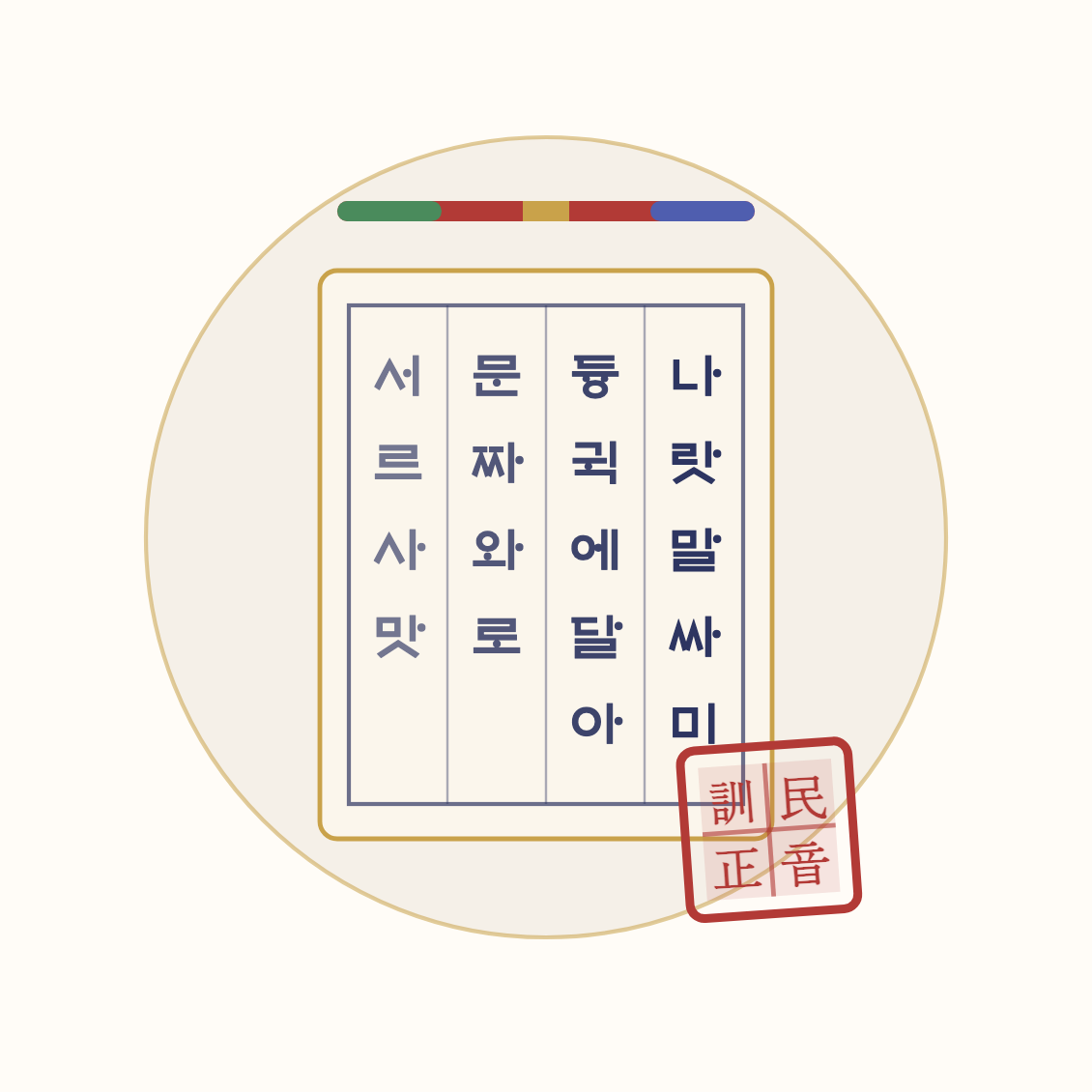
"A wise man can learn it in a morning; a fool in ten days."
— Hunminjeongeum, 1446
It's the only major alphabet on Earth with a named inventor and a manual explaining every design choice. And those choices are the genius part.
The letters are pictures of your mouth
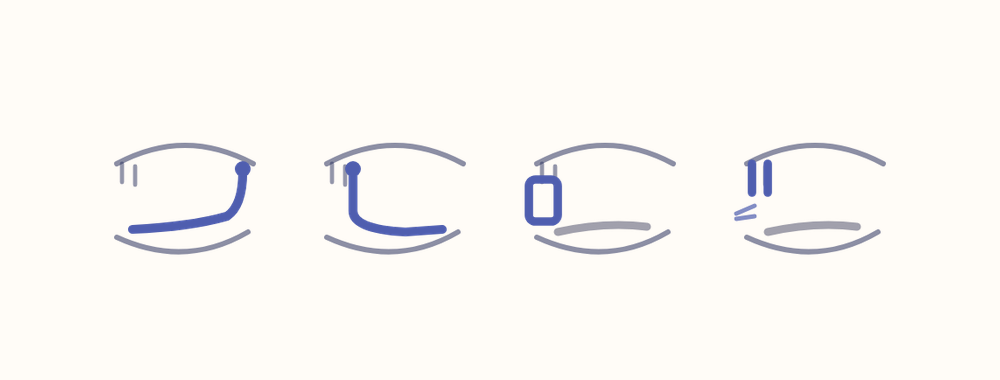
Each consonant is a tiny diagram of how you make the sound. ㄱ is your tongue at the back of your mouth; ㄴ is the tongue-tip behind your teeth; ㅁ is your closed lips; ㅅ is a tooth. Say them slowly — you'll feel your mouth make the shape.
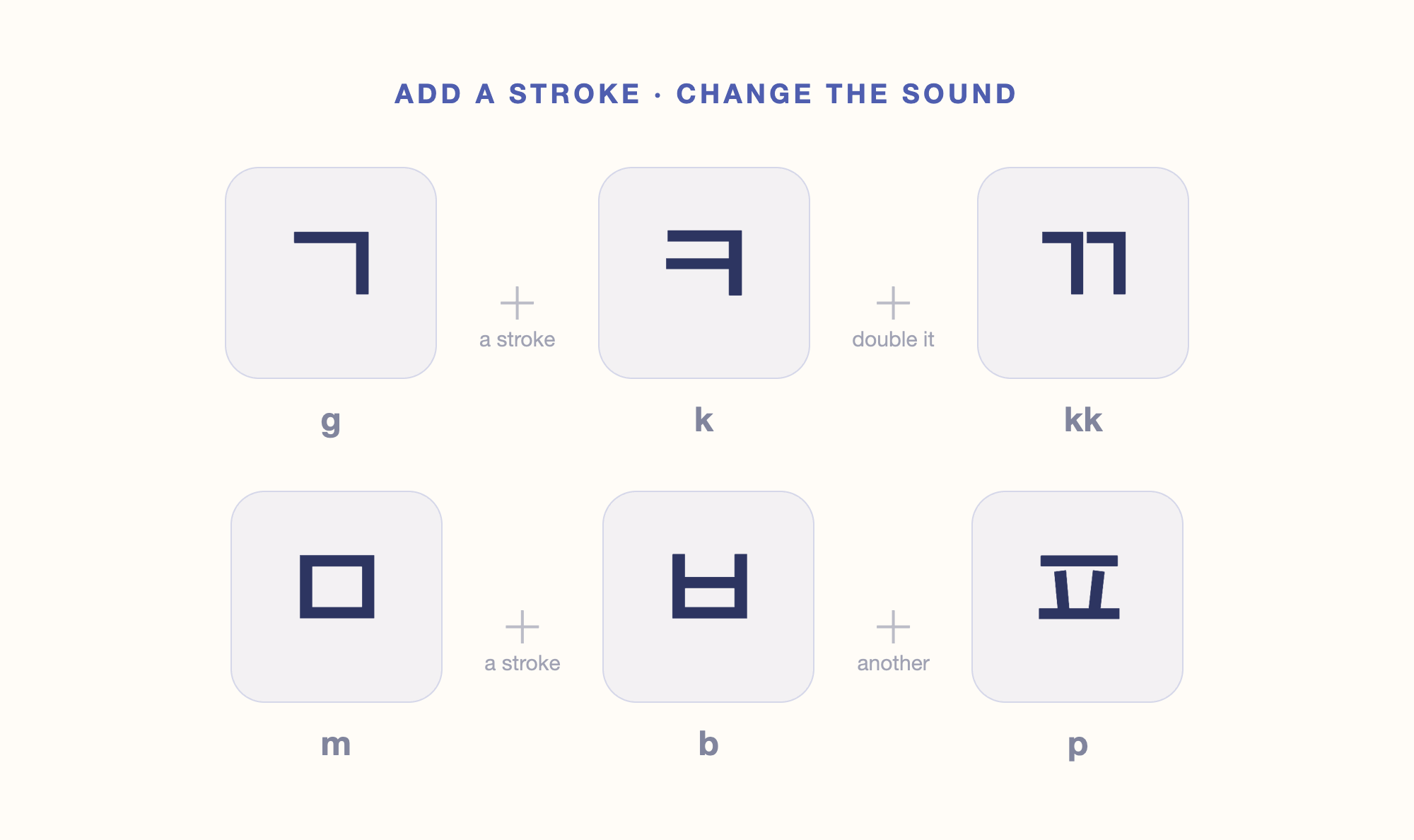
Add a stroke, change the sound
Related sounds share a shape and grow by a single stroke. The look of the letter tells you the sound — so you're learning a pattern, not 24 random symbols.
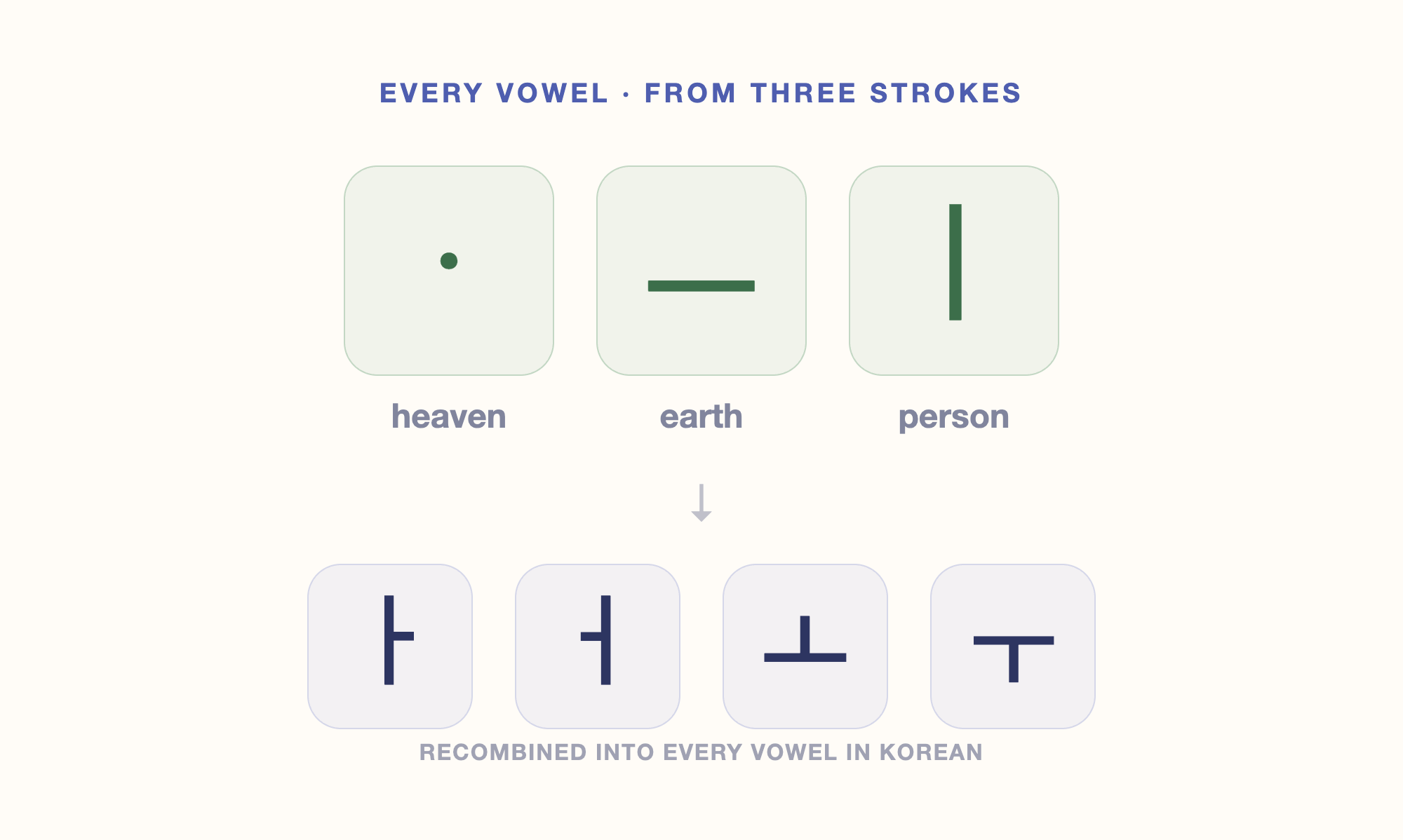
Every vowel, from three strokes
The vowels are built from just three pieces — a dot for heaven, a line for earth, an upright for a person — recombined into all of them.
"One of the greatest intellectual achievements of humankind."
— linguist Geoffrey Sampson, on Hangul
Which is why you can learn it fast
Because it's a system, not a pile of symbols, reading Hangul is something you can genuinely pick up fast. That's how Flipside's Read Hangul course teaches it — by shape families, with a native voice for every letter, the way Sejong built it. Sound out a word, drop it into the dictionary, and watch yourself read.
Ready to go from here? Read Hangul in a weekend, then point your new skill at the Korean you actually love with our guide to learning Korean from K-dramas.