Learn to Read Hangul in a Weekend: a Realistic 2-Day Plan
You've decided this is the weekend you stop leaning on romanization. Good — because reading Hangul is one of the few language goals you can genuinely finish in two days. Not fluency, not grammar. But sounding out a sign, a name, a song title by Sunday night? Absolutely. Here's the plan.
Two days is genuinely enough
Hangul wasn't built to be hard. It has just 24 letters — 14 consonants, 10 vowels — and they run on a system instead of rote memory (that's the whole reason it's considered the most scientific alphabet ever made). Every honest estimate online lands around 90 minutes to a few hours for the basics. A weekend is a comfortable target, not a stretch.
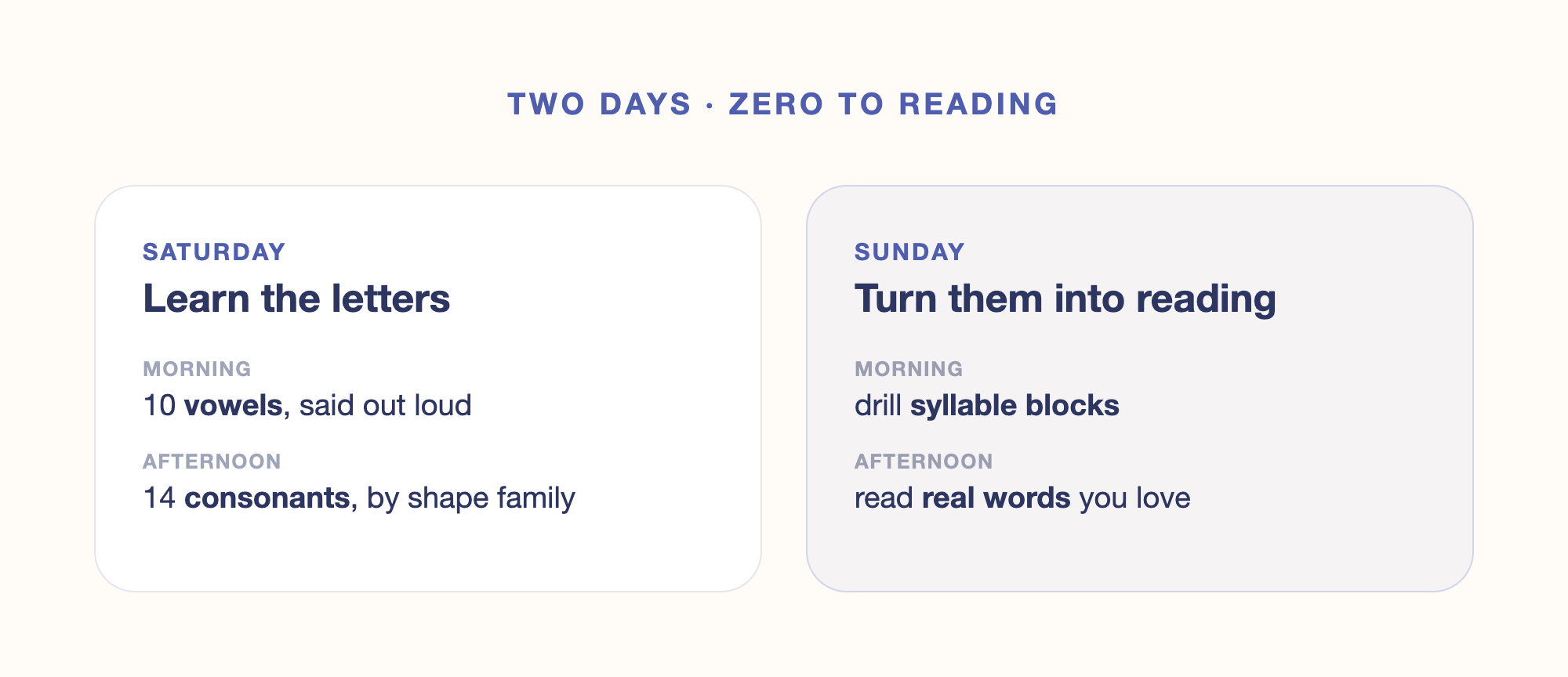
One rule for the two days: learn the letters Saturday, turn them into reading Sunday.
Saturday: learn the letters
Don't cram all 24 at once. Vowels in the morning — say each out loud as you go. Consonants in the afternoon, grouped by shape family (ㄱㅋ, ㄴㄷㅌ, ㅁㅂㅍ…) so the shapes do the memorizing for you.
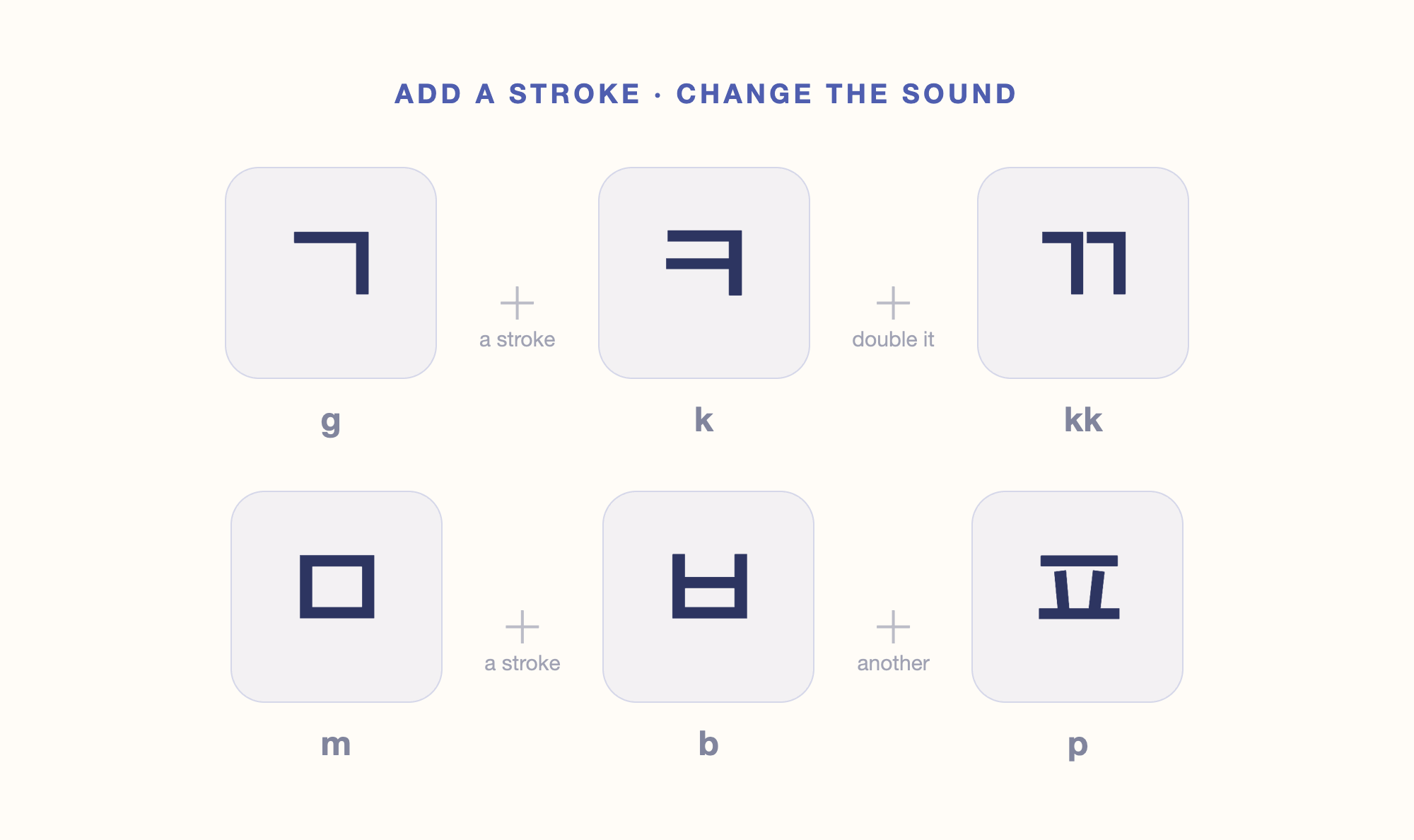
By evening you'll recognize all 24 in isolation. You won't be fast yet — that's fine. Speed is Sunday's job.
Sunday: stack them into blocks
Here's the trick that makes it click: you don't read Hangul in a straight line. You stack it into square syllable blocks — a consonant, a vowel, sometimes a final consonant underneath.
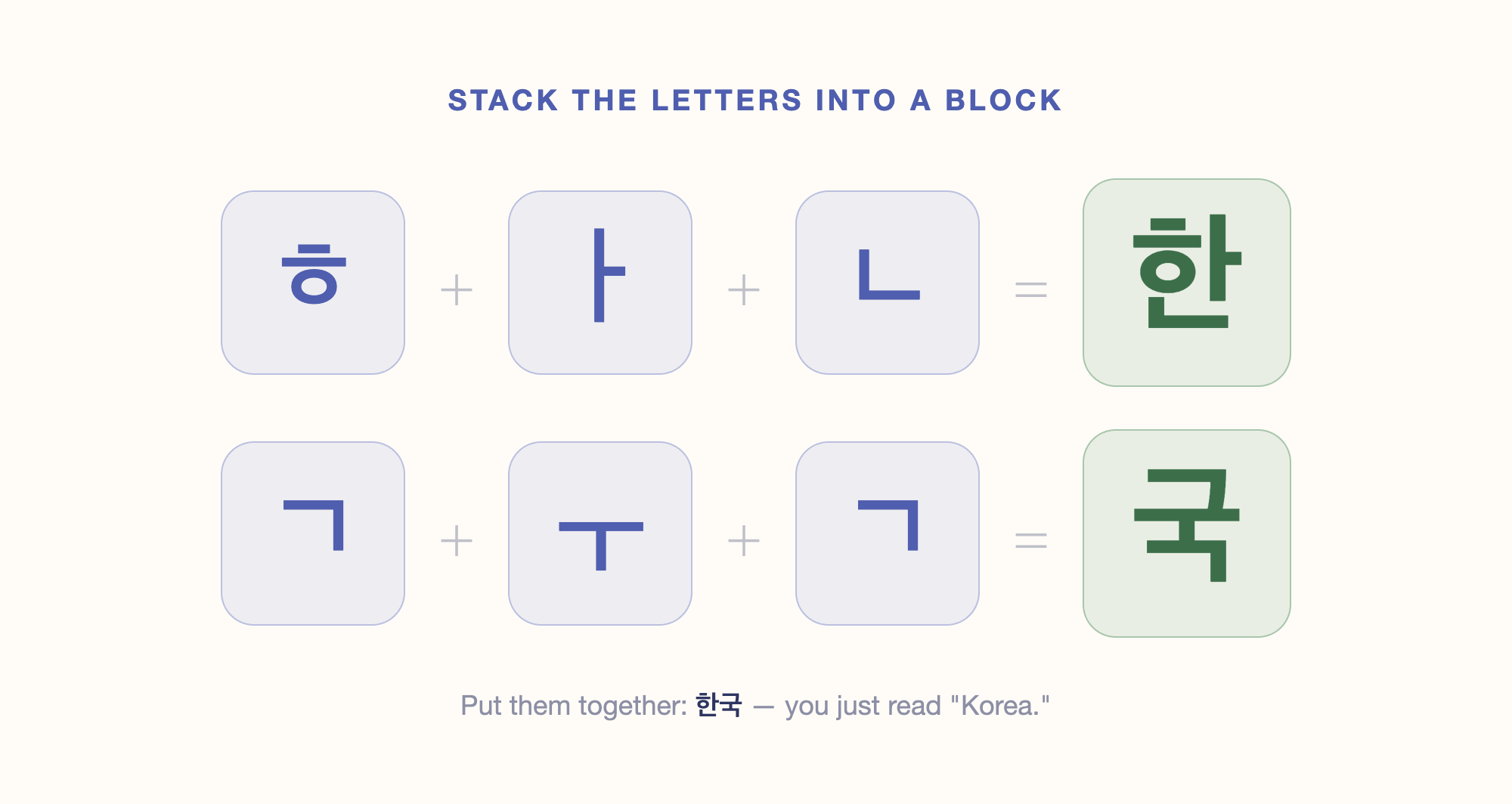
You don't read Hangul in a line. You read it in blocks.
Once the stacking rule clicks, reading becomes a quick process: first consonant, vowel, bottom letter, blend. Drill it on simple blocks in the morning. In the afternoon, read words you actually care about — names like 비비, the title of whatever you're watching. Words you love stick far harder than a chart.
Monday on: don't let it evaporate
A weekend gets you reading; keeping it takes about two weeks of light review — five minutes a day beats one big Saturday and nothing after. The most rewarding way to practice is to read the Korean you already have feelings about: our guide to learning Korean from K-dramas picks up right where this leaves off, and you'll soon notice the alphabet you just learned is also the one built for your phone.
That loop — meet a letter, hear it, build a block, read a real word — is exactly what Flipside's Read Hangul course is built around, with romanization fading as you go. Sound a word out, check it in the dictionary, and watch yourself read.